Collagen and Firm Skin: What Studies and Labels Actually Tell You
Note: Food supplements are not a substitute for a balanced, varied diet and a healthy lifestyle. Do not exceed the stated recommended daily intake. Keep out of reach of young children. This content is for general information only and is not a substitute for medical advice – please consult a doctor or pharmacist if you have health concerns.
What changes in skin with age and environmental exposure
Skin has several layers. In the dermis, collagen fibres form part of the supporting structure; elastin and water balance are separate concepts. This tissue changes with age and with influences such as UV exposure. That context does not diagnose an individual skin concern, and it does not establish what a supplement does. Observations around hormonal change and skin collagen are also physiological context, not evidence for collagen products. *[Structure context: Ricard-Blum 2011; skin context: Brincat et al. 1987]*
What oral-collagen studies actually measure in skin research
Research may examine endpoints such as skin elasticity, hydration measurements or wrinkle depth. None of these is automatically the same as “firm skin”. Whether a finding applies beyond a specific study depends on the population, formulation, duration, comparator and reported funding. The checked register for this route does not contain a fully verified human source that supports a percentage, timeframe or outcome claim. This article therefore explains the research question rather than promising an effect.
What a label can tell you, and what it cannot
A label may state a declared source, ingredients and whether a product is hydrolysed. These are technical or product facts. They do not by themselves establish skin firmness, molecular-weight quality or superiority. When comparing products, read what is actually declared and do not treat a label as a study result.
Keeping skin care, sun protection and medical concerns separate
Skin protection and skin care are separate subjects; a supplement question should not replace them. New, distressing or unclear skin changes deserve professional assessment. That is a boundary between general information and individual care, not remote medical advice.
💡 Look for the measurement question
- 1.A claim about “firm skin” needs a clear next question: which outcome was measured, in whom, with what intervention and for how long? Without that context, the claim cannot be weighed properly.
Existing product overview
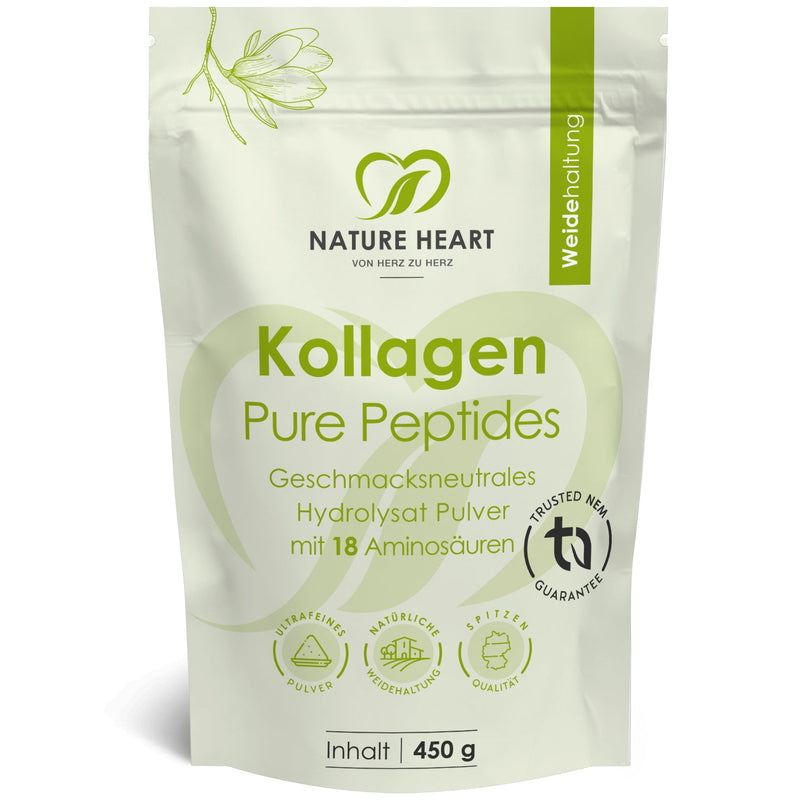
Existing product card as ingredient context; the label does not establish a skin outcome.

Standalone product card in a separate cofactor context; it is not evidence for skin outcomes.
* These are affiliate links. If you buy through them we earn a commission – the price stays the same for you.
Frequently asked questions
What does skin elasticity mean?
Skin elasticity is a measurable property of skin. It is not the same as the everyday idea of firm skin and does not describe what a particular product will do.
Do oral-collagen studies automatically measure firm skin?
No. Studies may assess separate endpoints such as elasticity, hydration measurements or wrinkle depth. Without fully checked study and product details, those results cannot become a general skin-outcome claim.
What can a collagen label tell you?
A label may describe source, ingredients and processing. On its own, it does not establish a skin effect, quality level or superiority.
Conclusion
Related articles
Vegan Collagen Alternatives: How to Read Terms, Claims and Labels
“Vegan collagen alternative” can mean several things. The key distinction is whether a product contains collagen, carries an authorised nutrient claim or simply uses marketing language.
ReadCollagen for Joints, Bones & Connective Tissue
Collagen as a structural protein in joints, bones and connective tissue: what studies examined and where their limits lie.
ReadThe Most Important Vitamins for Your Immune System
Vitamins in nutrition: an overview of vitamin D, C, zinc and selenium, authorised claims and their limits.
ReadNote: This article is for general information only and is not a substitute for medical advice. Food supplements are not a substitute for a balanced, varied diet and a healthy lifestyle. Please consult a doctor if you have health concerns. Any EFSA health claims mentioned refer to the respective nutrients at a sufficient daily intake.
About the editorial team
The content on introdrink.ch is created by our editorial team using AI-based tools and then editorially reviewed. Health-related product statements follow the EU Health Claims Regulation (HCR); the authorised statements are shown on the respective product pages. Where we reference scientific studies, we link to the original sources directly in the article. More about us →