Collagen for Joints, Bones & Connective Tissue

Note: Food supplements are not a substitute for a balanced, varied diet and a healthy lifestyle. Do not exceed the stated recommended daily intake. Keep out of reach of young children. This content is for general information only and is not a substitute for medical advice – please consult a doctor or pharmacist if you have health concerns.
Collagen is often associated with skincare and anti-ageing, although its structural role in the body is much broader. As the most abundant protein in the human body, it forms the scaffold of joint cartilage, bone, tendons, ligaments and connective tissue. That role is anatomically described and well documented.
A second question has to be read separately from it: what an intake of collagen peptides changes about it. This article keeps the two levels apart. It describes how the tissues are built, reports the studies carried out on these questions, and names the endpoint, the population and the limit for each one. Where the data do not support a statement, that is stated explicitly. For the basics, we recommend our Collagen guide.
Collagen type II and joint cartilage
Evidence status M3: While type I collagen occurs in skin and bone, collagen type II is the main component of hyaline cartilage: the smooth layer covering joint surfaces. Ricard-Blum (2011), Cold Spring Harbor Perspectives in Biology reviews the collagen family and which type occurs in which tissue. Limit: the work describes the biology of these proteins. It establishes no link to an ingested product.
Joint cartilage can change with age, with higher body weight and under high mechanical load. The clinical term for this is osteoarthritis. It is a finding a doctor has to establish, and this article establishes none. What it does: it describes which research addresses this question and what its results state.
Evidence status H1: Crowley et al. (2009), International Journal of Medical Sciences examined an undenatured form of type II collagen over 90 days in people with knee osteoarthritis. The measures recorded were questionnaire scores (WOMAC, visual analogue scale, Lequesne index). The limits to read alongside: the study is small, it ran for three months, it recorded self-reported measures and no imaging of cartilage, and it was carried out in a clinically defined population. Nothing follows from it for people without that finding.
Evidence status H1: A synthesis of several randomised, placebo-controlled studies is provided by García-Coronado et al. (2019), International Orthopaedics. Limit: meta-analyses pool studies of different preparations, doses and durations. Their weight depends on the quality of the included work, and they permit no transfer to any particular product on the market.
Collagen and bone: 90% of the organic matrix
Evidence status M3: Bone does not consist of mineral alone. Its organic ground substance consists of roughly 90% collagen type I, into which calcium and phosphate are deposited. That figure describes how a tissue is built: it is an anatomical measure and not a statement about a product. The collagen scaffold gives bone its toughness, the mineral its hardness.
Both components change with age: bone mineral density declines, and the collagen fraction changes as well.
Evidence status H1: König et al. (2018), Nutrients examined specific collagen peptides in a randomised, placebo-controlled study over twelve months in postmenopausal women with age-related reduced bone density. Participants received 5 g daily. The primary endpoint was the change in bone mineral density at the femoral neck and the spine; bone markers in blood were determined in addition. Limits: 131 women enrolled, a narrowly defined population (postmenopausal, with pre-existing reduction in bone density), and an examination of one specific study preparation. The amount stated here describes the study protocol and is not an intake recommendation. The study makes no statement about men, younger women or people with normal bone density.
Not legally assertable: Nothing follows from a study in a clinically defined group about a product available on the market changing your bone density, preventing fractures or complementing medical treatment. Separate, individually regulated statements exist for Vitamin D3 + K2 and calcium, and they are shown on the respective product pages. This article does not apply them.
Connective tissue: the underrated network
Evidence status M3: Connective tissue is more than filler material between the organs. It forms a continuous network (fascia) running through the body and performing several describable tasks:
- Structure: holds organs, muscles and vessels in place
- Force transmission: fascia transmit muscle force to the skeleton
- Transport: medium for nutrients and waste products
- Immune function: contains immune cells and forms a first barrier
Collagen types I and III form the basic framework of this tissue. That is a description of structure.
Not legally assertable: Nothing follows from the build of a tissue about an intake of collagen firming the physique, strengthening connective tissue or keeping fascia healthy. Structure and effect are two separate levels. How that line runs in detail is set out in the article Collagen as a structural protein in tendons, ligaments and fascia.
Sport and recovery: what was examined in tendons and ligaments
Evidence status M3: Tendons and ligaments consist mainly of collagen. Their matrix changes when it is mechanically loaded: build-up and remodelling run as the body's own processes over longer periods. Kjaer (2004), Physiological Reviews summarises this adaptation. Limit: a physiological review without reference to food supplements and without an endpoint from an intervention study.
Evidence status H1, synthesis parameter: Shaw et al. (2017), The American Journal of Clinical Nutrition is the work the frequently quoted doubling figure goes back to. Eight healthy men were examined in a randomised crossover trial. They took 5 g or 15 g of vitamin C-enriched gelatin or a placebo, each about one hour before six minutes of rope-skipping, three times a day over three days. What was measured was a blood marker of collagen formation (P1NP): in the 15 g group it doubled compared with the baseline value.
Why that figure has to be read with care: eight participants are a very small group, the substance was gelatin and not a collagen hydrolysate from the market, what was measured was a marker in blood and not a property of a tendon, and part of the results comes from ligaments grown in the laboratory (evidence status L2) rather than from humans. A blood marker indicates a metabolic process. It documents neither changed load capacity nor a lower rate of injury.
Evidence status H1: Clark et al. (2008), Current Medical Research and Opinion examined collagen hydrolysate over 24 weeks in physically active people with activity-related joint complaints and no joint disease. What was recorded was the severity of complaints as reported by the participants themselves. Limits: self-report as the endpoint, a limited duration and a selected population from university sport.
Not legally assertable: Nothing follows from these studies about an intake before training making your tendons more resilient, speeding up your recovery or preventing injuries.
Teeth, gums and the supporting apparatus
Evidence status M3: The gums and the tooth-supporting apparatus (periodontium) consist to a large extent of collagen. Dentin too, the substance beneath the tooth enamel, contains collagen type I as a structure-giving component. That is an anatomical description of these tissues.
EFSA health claim: Vitamin C contributes to normal collagen formation for the normal function of teeth. Vitamin C contributes to normal collagen formation for the normal function of gums. These statements are authorised and refer to the nutrient vitamin C at a sufficient daily intake. They do not apply to collagen as an ingredient and establish no statement about a collagen product.
Not legally assertable: Nothing follows from the composition of these tissues about an intake of collagen firming the gums, anchoring teeth more stably or changing the course after a dental procedure. Questions about gums and the tooth-supporting apparatus belong in dental consultation.
Which amounts were examined in studies
The following entries describe which amount was examined in which study, over which period and in which group. They are a description of the study record and explicitly not an intake recommendation:
- Bone density: 5 g of specific collagen peptides daily over twelve months, 131 postmenopausal women with reduced bone density (König et al. 2018)
- Joint complaints in athletes: collagen hydrolysate over 24 weeks, physically active people without joint disease, endpoint self-report (Clark et al. 2008)
- Collagen synthesis marker: 5 g or 15 g of gelatin with vitamin C, each one hour before loading, eight healthy men over three days (Shaw et al. 2017)
- Knee osteoarthritis: undenatured type II collagen over 90 days, clinically defined population, endpoint questionnaire scores (Crowley et al. 2009)
Not legally assertable: No amount, duration or combination suitable for you can be derived from these study protocols. The studies used defined preparations in defined groups. Which amount of a particular product is appropriate is not a question this article can answer: it belongs in consultation with a doctor or pharmacist.
Evidence status N: For a robust general statement on ingested collagen and the function of joints, bones and connective tissue in healthy adults, large long-term studies with pre-specified functional endpoints are lacking. That gap is named here rather than covered over with review literature.
💡 How to read the statements in this article
- 1.H1 means: examined in a human study, with a named endpoint and a named population
- 2.L2 means: so far observed only in an animal model or a laboratory experiment
- 3.M3 means: described build or presumed mechanism, without evidence of an effect
- 4.N means: no sufficient study exists for this question, and the gap is named
- 5.An amount here always describes a study protocol, never an intake recommendation
- 6.Health questions and complaints belong in consultation with a doctor or pharmacist
Existing product overview
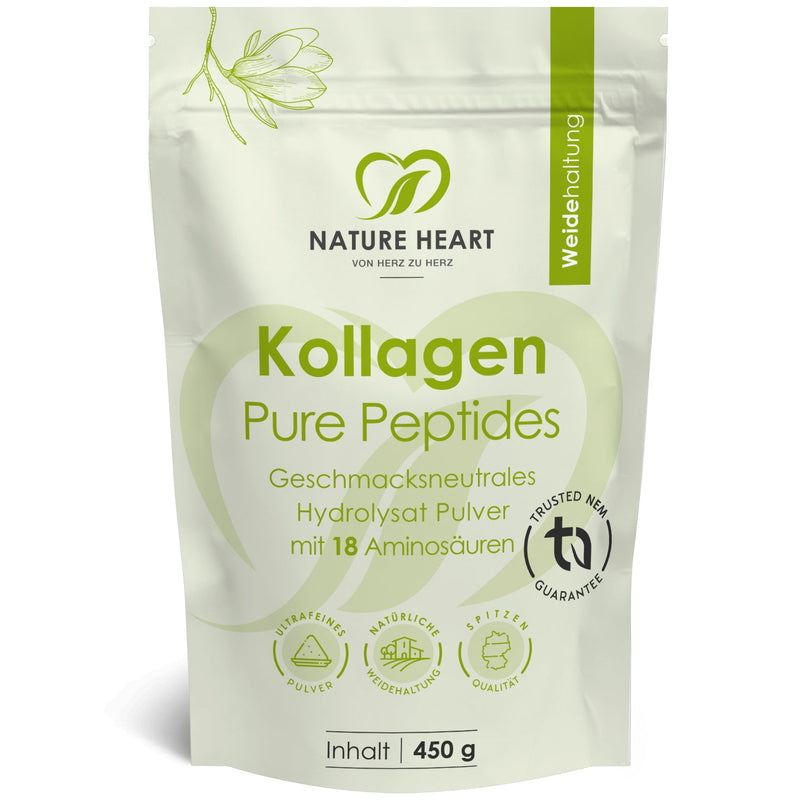
Collagen hydrolysate from pasture-raised cattle. The composition details are on the product page.
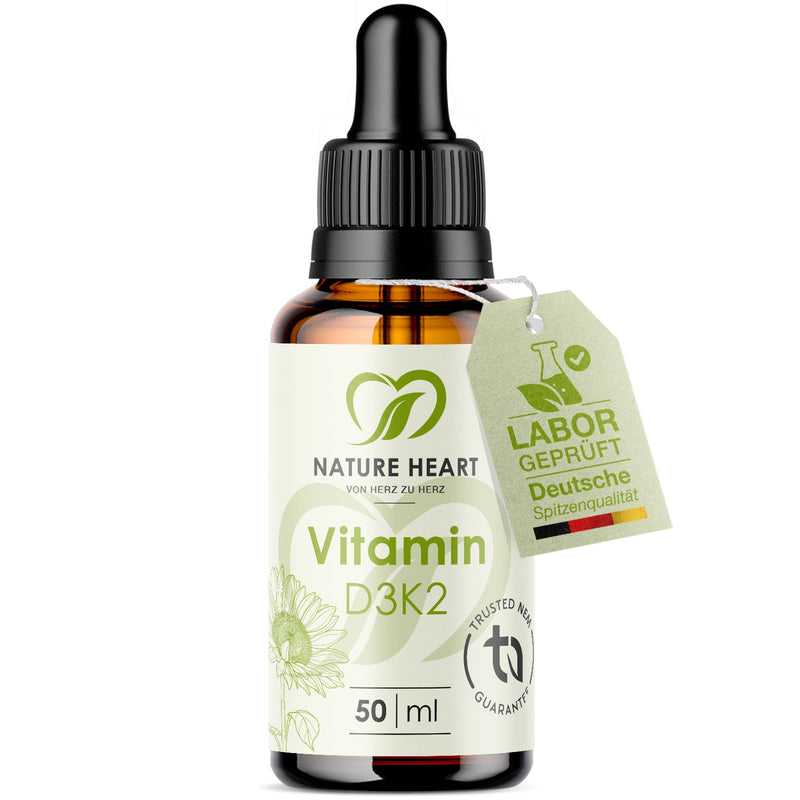
Vitamin D3 and K2 as a separate product. The authorised statements for it are on the product page.
* These are affiliate links. If you buy through them we earn a commission – the price stays the same for you.
Frequently asked questions
What has been examined on collagen and osteoarthritis?
Osteoarthritis is a finding a doctor has to establish, and this article establishes none. The question was examined in clinical studies in people in whom that finding was already present: Crowley et al. (2009) over 90 days with questionnaire scores as the endpoint, plus a meta-analysis of randomised studies by García-Coronado et al. (2019). The limits of that data are small groups, short durations, self-report instead of imaging, and different preparations. Nothing follows from it about a product acting on a disease, altering its course or counteracting its occurrence. With joint complaints, medical assessment is the right route.
After how long did studies actually measure?
That differs considerably by question, and it is a statement about study design rather than about a course you should expect. The marker of collagen formation in Shaw et al. (2017) was recorded within hours to days. Clark et al. (2008) recorded reported complaints over 24 weeks, Crowley et al. (2009) over 90 days. Bone density in König et al. (2018) was determined after twelve months, because bone remodels slowly. A period after which something happens in your case cannot be derived from this.
Can collagen prevent joint injuries?
No, that is not assertable on the available data. Studies in athletes have recorded markers of collagen formation and self-reported complaints, not the frequency of injuries. In Shaw et al. (2017) there were eight participants, what was measured was a blood value, and part of the results comes from ligaments grown in the laboratory. A marker in blood indicates a metabolic process and documents neither changed load capacity nor a lower risk of injury. Load capacity arises primarily from training, build-up and recovery.
What distinguishes collagen and glucosamine biochemically?
They are two different classes of substance. Collagen is a protein and, after digestion, supplies amino acids and small peptides. Glucosamine is an amino sugar and a building block of glycosaminoglycans, which occur in cartilage and joint fluid. That distinction is biochemically described. Which of the two makes sense for a person, whether either does, and whether a combination achieves anything is not answered by it: that is a question for a doctor or pharmacist.
Conclusion
Evidence status M3: In the musculoskeletal system, collagen is a structural protein with a describable build and a describable distribution: type II in cartilage, types I and III in bone and connective tissue. That role is well documented.
What an intake changes about it is a separate question, and it is not conclusively answered. It was examined in defined groups with defined preparations: postmenopausal women with reduced bone density, people with knee osteoarthritis, physically active people with activity-related complaints. For healthy adults outside those groups, large long-term studies with functional endpoints are lacking. That gap is left standing in this article rather than covered over. You will find more background in our Collagen guide.
Related articles
Collagen and Firm Skin: What Studies and Labels Actually Tell You
“Firm skin” is not a single study endpoint. This article separates skin structure, measured outcomes, product labels and the limits of research.
ReadVegan Collagen Alternatives: How to Read Terms, Claims and Labels
“Vegan collagen alternative” can mean several things. The key distinction is whether a product contains collagen, carries an authorised nutrient claim or simply uses marketing language.
ReadOmega-3: Why Fish Oil Is So Important
Omega-3 fatty acids: what studies and authorised claims cover, where the limits lie and why they do not establish an individual dose.
ReadNote: This article is for general information only and is not a substitute for medical advice. Food supplements are not a substitute for a balanced, varied diet and a healthy lifestyle. Please consult a doctor if you have health concerns. Any EFSA health claims mentioned refer to the respective nutrients at a sufficient daily intake.
About the editorial team
The content on introdrink.ch is created by our editorial team using AI-based tools and then editorially reviewed. Health-related product statements follow the EU Health Claims Regulation (HCR); the authorised statements are shown on the respective product pages. Where we reference scientific studies, we link to the original sources directly in the article. More about us →