Hydrogen Water Production: Electrolysis, Nanobubbles & Quality
Note: Food supplements are not a substitute for a balanced, varied diet and a healthy lifestyle. Do not exceed the stated recommended daily intake. Keep out of reach of young children. This content is for general information only and is not a substitute for medical advice – please consult a doctor or pharmacist if you have health concerns.
Enriching water with hydrogen sounds simple, but it is a technological challenge. Molecular hydrogen (H₂) is the smallest molecule of all and escapes from liquids extremely quickly. The quality of hydrogen water therefore depends largely on the production technology.
In this article we explain the various methods of producing H₂ water, what nanobubbles are, how you can assess quality and what to look for when choosing your hydrogen water.
How does the hydrogen get into the water?
There are various methods for enriching drinking water with molecular hydrogen. The three most important are:
- Electrolysis: The most common method. Water is split into hydrogen (H₂) and oxygen (O₂) using an electric current. The hydrogen is then dissolved in the water.
- Chemical reaction: Metallic magnesium reacts with water and produces H₂ in the process. This method is used in some hydrogen sticks, but it often delivers lower concentrations.
- Direct infusion: Pure hydrogen is introduced directly into the water under pressure – the method used in industrial bottling such as the AWAKE products.
Each method has advantages and disadvantages in terms of H₂ concentration, stability and the purity of the end product.
Electrolysis in detail: how hydrogen generators work
Hydrogen generators for home use rely on PEM electrolysis (Proton Exchange Membrane). A special membrane is used that allows protons to pass through but separates the gases:
- Water is filled into a chamber
- Electrodes generate a direct current
- Hydrogen (H₂) forms at the cathode
- Oxygen (O₂) forms at the anode
- The PEM membrane separates the gases and avoids the formation of ozone or chlorine
Important: Cheap generators without a PEM membrane can produce unwanted by-products such as ozone. When choosing a device, always look for SPE/PEM technology.
Generators typically reach 0.5–1.2 ppm H₂. The water should be drunk within 15–30 minutes, as the hydrogen continuously escapes.
Nanobubble technology: the stability breakthrough
The biggest problem with hydrogen water is stability: H₂ escapes from an open glass within minutes. This is where nanobubble technology comes in.
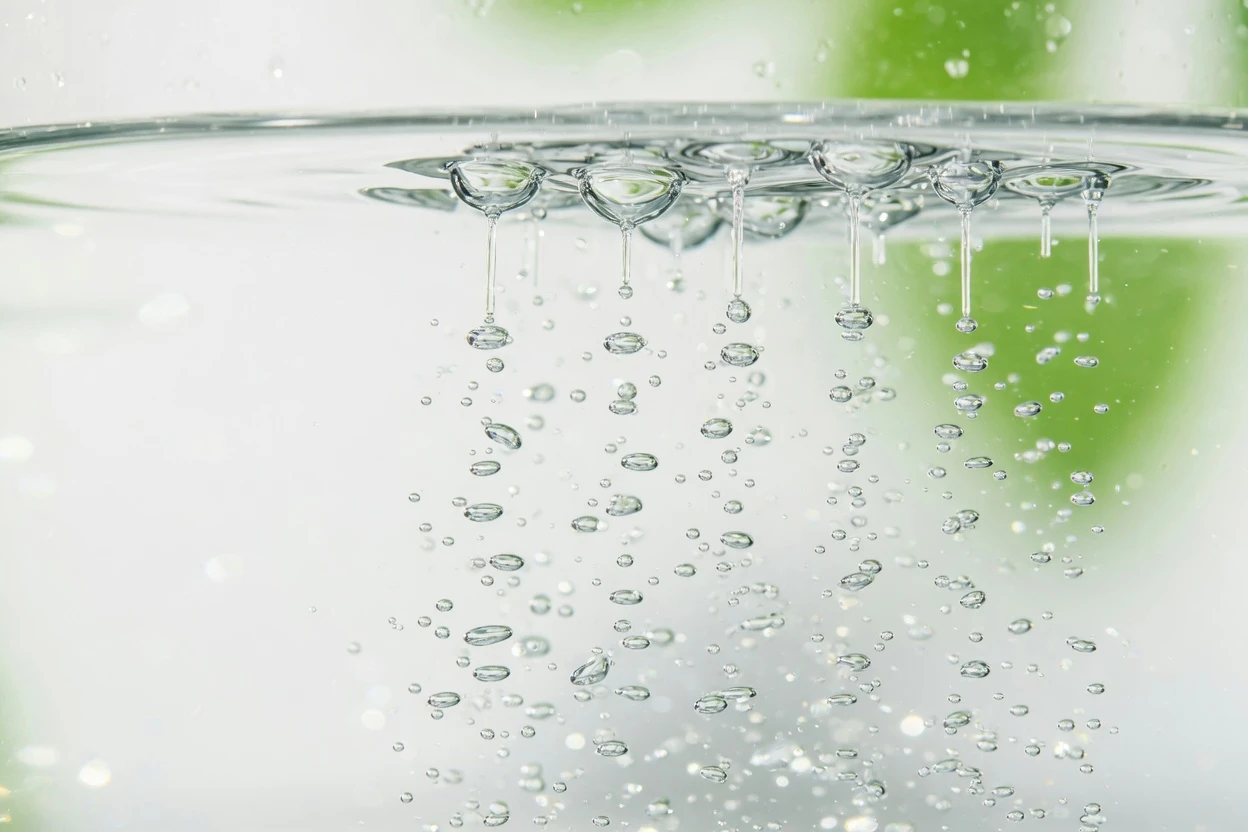
What are nanobubbles? Extremely small gas bubbles (under 200 nanometres – around 500 times smaller than a hair). Unlike normal bubbles, which rise and burst, nanobubbles remain stable in the water for weeks to months.
Advantages of nanobubble technology:
- Higher H₂ concentration possible (up to 1.6 ppm and more)
- Significantly longer shelf life of the dissolved hydrogen
- Better bioavailability thanks to the enormous surface area of the nanobubbles
- Enables bottling in cans and bottles for everyday use
The AWAKE products use this technology to offer hydrogen water in practical cans and glass bottles – with a stable H₂ concentration until opening.
ppm and ORP: how to measure quality
Two metrics are decisive for assessing hydrogen water:
ppm (parts per million) – measures the concentration of dissolved hydrogen:
- 0.5 ppm: Minimum effective concentration according to studies
- 0.8–1.0 ppm: Good range for daily consumption
- 1.0–1.6 ppm: High concentration, as achieved with AWAKE cans
- 1.6 ppm: Saturation limit at normal pressure and room temperature
ORP (oxidation-reduction potential) – measures the antioxidant capacity in millivolts:
- Tap water: +200 to +400 mV (oxidising)
- Good H₂ water: −200 to −600 mV (reducing, antioxidant)
The more negative the ORP value, the stronger the antioxidant effect. High-quality H₂ water drops or reagents for home testing are available online.
Generators vs. cans vs. bottles: what suits you?
Every form of hydrogen water has its advantages and disadvantages:
H₂ generators (home devices)
- ✅ Produce unlimited H₂ water
- ✅ Cost-effective in the long run
- ❌ Initial investment (100–500 CHF)
- ❌ Water has to be drunk immediately
- ❌ Quality varies from device to device
Pre-filled cans (e.g. AWAKE can)
- ✅ Constant, high H₂ concentration
- ✅ Practical for on the go
- ✅ No preparation needed
- ❌ Higher running costs
- ❌ Aluminium can (recyclable)
Pre-filled glass bottles (e.g. AWAKE bottle)
- ✅ Premium quality in glass
- ✅ Stable concentration
- ✅ Sustainable packaging
- ❌ Higher price
For getting started, we recommend the AWAKE can – practical, proven and with the right concentration. You can find details and subscription options on our hydrogen water page.
Quality markers: what to look for
Not every hydrogen water is the same. Look out for the following quality criteria:
- H₂ concentration: At least 0.5 ppm, ideally above 1.0 ppm. Have the values confirmed by the supplier.
- Production process: Prefer nanobubble technology or high-quality PEM electrolysis. Chemical H₂ sticks often deliver too little concentration.
- Water source: Filtered or natural spring water as a basis. Look for information on the water's origin.
- Packaging: Aluminium or glass retain the hydrogen better than PET bottles. PET is gas-permeable.
- Independent testing: Reputable suppliers have their products tested regularly by independent laboratories.
- Country of manufacture: The AWAKE products are manufactured in Germany under strict quality standards.
A simple rule of thumb: if a supplier provides no information on ppm values and production processes, scepticism is warranted.
💡 Storing and drinking hydrogen water properly
- 1.Store unopened cans and bottles in a cool, dark place
- 2.Drink within 15–20 minutes of opening – the hydrogen escapes
- 3.Do not heat! Heat accelerates the escape of the hydrogen
- 4.For generators: drink freshly produced water immediately, do not store it
- 5.Hydrogen water is not suitable for cooking – only for drinking directly
Everything about hydrogen water
Learn more about AWAKE, dosage, the research and how H₂ can fit into your day – on our comprehensive overview page.
To the hydrogen water guideOur product recommendations

Essential amino acids for recovery – perfect in combination with hydrogen water after exercise.

Natural vitamin C supports cell regeneration and reinforces antioxidant protection.
* These are affiliate links. If you buy through them we earn a commission – the price stays the same for you.
Frequently asked questions
What is the difference between hydrogen water and alkaline water?
Alkaline water has an elevated pH value (basic), whereas hydrogen water contains dissolved molecular hydrogen (H₂). These are two different concepts. H₂ water can have a neutral pH value and still have an antioxidant effect. The scientific evidence for H₂ water is considerably stronger than for alkaline water.
How do I tell whether my hydrogen water is still effective?
The easiest way is with H₂ test drops (methylene blue reagent), which change colour when hydrogen is present. With cans and bottles the H₂ remains stable until opening. With generators you should drink the water within 15–30 minutes.
Can I make my own H₂ water with a hydrogen generator?
Yes, but pay attention to quality: only use devices with an SPE/PEM membrane, clean the electrodes regularly and drink the water immediately. Cheap devices without membrane separation can produce harmful ozone or chlorine.
Why is PET packaging unsuitable for hydrogen water?
PET plastic is gas-permeable – the tiny hydrogen molecule diffuses through the bottle wall and escapes over the course of hours. Aluminium and glass are gas-tight and reliably keep the hydrogen in the water.
How long does hydrogen water in a can keep?
Unopened, several months up to the best-before date. Nanobubble technology ensures a stable H₂ concentration. Once opened, the water should be drunk within 15–20 minutes.
Conclusion
The quality of hydrogen water stands or falls with the production technology. Nanobubble processes and high-quality PEM electrolysis deliver the best results – measurable in ppm and ORP values. Whether you opt for a home generator or pre-filled products such as the AWAKE line depends on your everyday routine and budget.
The most important thing: look for transparent quality information, reputable manufacturers and the right drinking technique (quickly after opening). You can find more on the effects of hydrogen water in our article Hydrogen Water Effects: How H₂ Works in the Body.
Related articles
Hydrogen Water Effects: How H₂ Works in the Body
How molecular hydrogen acts as a selective antioxidant and why H₂ water is attracting more and more attention.
ReadHydrogen water vs. alkaline water: where's the difference?
Two trends, one big difference: why hydrogen water and alkaline water are not the same thing – and what the science says.
ReadPlant Extracts for Liver & Digestion
How plant extracts and chlorophyll can complement normal liver function and a healthy metabolism.
ReadNote: This article is for general information only and is not a substitute for medical advice. Food supplements are not a substitute for a balanced, varied diet and a healthy lifestyle. Please consult a doctor if you have health concerns. Any EFSA health claims mentioned refer to the respective nutrients at a sufficient daily intake.
About the editorial team
The content on introdrink.ch is created by our editorial team using AI-based tools and then editorially reviewed. Health-related product statements follow the EU Health Claims Regulation (HCR); the authorised statements are shown on the respective product pages. Where we reference scientific studies, we link to the original sources directly in the article. More about us →